A luxury sauna performs well through a cold winter as long as the pad stays cleared of snow, the heater is sized for an unheated start, and glass panels and any built-in electronics are protected from repeated freeze-thaw cycles. None of this requires a different unit, but it does change the maintenance routine compared with running the same cabin in a mild climate. Here are eight specific things that matter once temperatures regularly drop below freezing.
1. Clear a Path and a Perimeter After Every Snowfall
Snow piled against the exterior wall traps moisture against the cladding and can accelerate weathering over a season, whether the exterior is cedar, heat-treated hemlock, or a composite panel. It can also block the door from swinging fully open and, on some models, bury a low-mounted ventilation intake that needs clear airflow to work correctly. A few minutes clearing a path to the door and a foot or so around the base after each snowfall prevents both problems from compounding. A plastic or rubber-edged shovel, rather than a metal one, avoids scratching the deck or pad finish during the clearing itself, and stacking cleared snow well away from the unit keeps it from sliding back against the base as it settles or melts partway during a thaw.
2. Size the Heater for a Cold Start, Not a Heated Room
Most heater sizing charts assume the surrounding structure starts near room temperature. An outdoor luxury cabin in a hard winter often starts each session with walls and air near freezing, which means the heater has to close a bigger gap before reaching target temperature. Sizing toward the upper end of the manufacturer’s recommended kilowatt range, rather than the lower end, keeps warm-up times reasonable through the coldest months instead of stretching toward an hour. A well-insulated cabin with a continuous foil vapor barrier behind the paneling closes that gap faster than an otherwise identical unit with gaps or thin insulation, so the heater size and the build quality of the walls work together rather than as separate line items.
3. Protect Glass Panels From Repeated Freeze-Thaw Stress
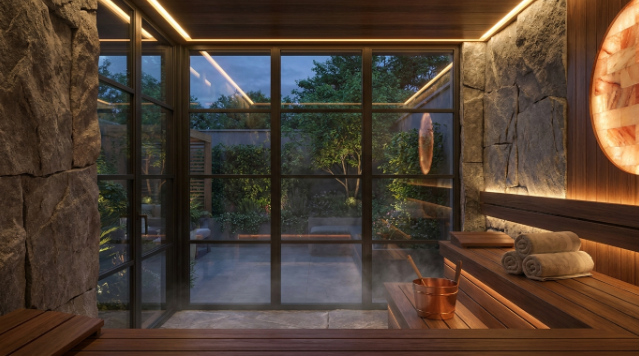
Panoramic glass doors and windows are a signature feature on many luxury cabins, and tempered glass itself handles cold weather without issue. The wear point is usually the weatherstripping and hardware around the frame, which can crack or stiffen after repeated freezing and thawing if it is not inspected periodically. A yearly check of the seals before winter sets in, with worn strips replaced before they fail, keeps drafts and moisture from finding their way into the frame.
4. Keep Built-In Audio and Lighting Systems Sealed and, in Extreme Cold, Powered Down Between Uses
Built-in sound systems and LED chromotherapy lighting are common on higher-end cabins and are generally rated for the heat and humidity inside during a session, but extreme outdoor cold combined with condensation is a different stress than indoor heat alone. Manufacturers typically specify a moisture-sealed enclosure for any electronics mounted inside an outdoor unit, and in regions that see extended stretches well below freezing, powering the system down between sessions rather than leaving it live reduces the risk of condensation-related failures.
5. Expect Wood to Move Slightly More in Winter
Wood contracts as it dries out in cold, low-humidity winter air, and small gaps can appear between boards that closed up tight again by summer. This is normal seasonal movement rather than a defect, and it is one more reason a continuous, well-sealed vapor barrier behind the interior paneling matters, since it protects the wall cavity from moisture regardless of how the visible wood grain shifts through the season.
6. Watch the Exterior Finish Closer Than in a Mild Climate
Cedar and heat-treated hemlock both hold up to winter weather well, but road salt spray near a driveway, ice-melt chemicals tracked onto a deck, and repeated freeze-thaw cycling on any exposed fasteners are all faster sources of wear in a cold climate than they would be somewhere milder. A yearly inspection of the exterior finish, touching up any exposed or worn spots before they spread, keeps a premium exterior looking the part for years longer. Checking the underside and the base trim closest to the pad is worth doing specifically, since that is where standing meltwater and ice-melt residue tend to concentrate over a season, well before wear shows up anywhere more visible on the walls.
7. Plan the Walk From House to Sauna
A luxury build often sits a short distance from the main house, and that walk matters more in winter than most buyers plan for ahead of time. A cleared, ideally covered or heated walkway keeps the trip from undoing the benefit of the session, especially for anyone stepping out barefoot or in a robe between a hot cabin and a cold house. Some cold-climate owners add a small heated mat or run a short section of radiant snow-melt cable under the path for exactly this reason. A covered breezeway or a simple roof extension over the last stretch of walkway is a lower-cost option that still keeps the path clear of fresh snow between shovelings and gives some shelter from wind on the walk back to the house.
8. Compare Cold-Weather Kilowatt Ratings Before Buying
Not every listed heater rating accounts for an unheated cold-climate start, and the gap between a mild-climate estimate and a realistic cold-climate one can run a full kilowatt or more on a mid-size cabin. Reviewing SweatDecks’ lineup against actual local winter lows, rather than a generic sizing chart alone, is worth the extra step before finalizing a heater choice for a cabin that will see real winter use, and any specific questions about a model’s cold-weather rating are worth asking the seller directly rather than assuming a mild-climate chart applies.
Frequently Asked Questions
Does cold weather damage a glass-front luxury sauna? Not directly. Tempered glass handles cold fine; the wear point is weatherstripping and hardware, which benefits from a yearly inspection before winter.
Why does a luxury sauna take longer to heat in winter? An outdoor cabin starts near outside temperature, so the heater has to close a bigger gap than it would from a milder starting point.
Should built-in audio and lighting systems be protected in winter? Yes, with a moisture-sealed enclosure, and powering them down between uses in extreme cold reduces condensation-related failures.
Does snow accumulation around a sauna cause problems? It traps moisture against the cladding and can block the door or a ventilation intake, so clearing it after each snowfall is worth the few minutes it takes.
References
- Cardiovascular and Other Health Benefits of Sauna Bathing: A Review of the Evidence, Mayo Clinic Proceedings, 2018
- Does the Combination of Finnish Sauna Bathing and Other Lifestyle Factors Confer Additional Health Benefits? A Review of the Evidence, Mayo Clinic Proceedings, 2023
- Benefits and risks of sauna bathing, The American Journal of Medicine, 2001
By Owen Pratt