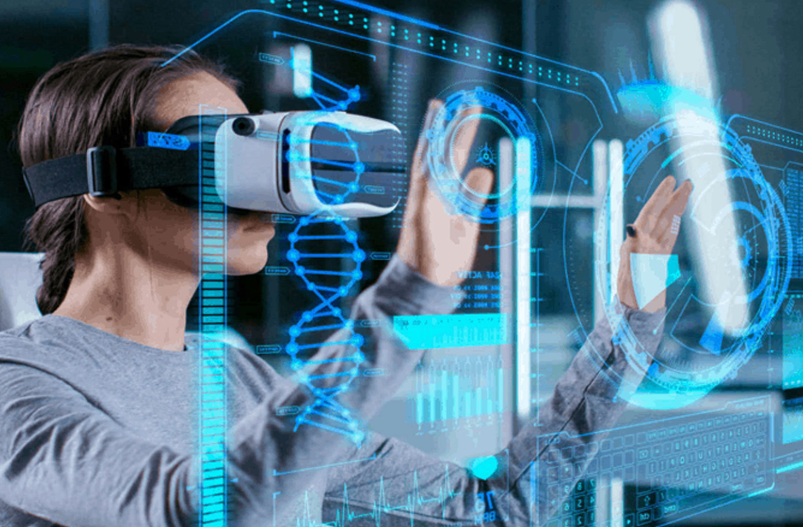
Virtual Reality (VR) technology has emerged as a transformative force across multiple sectors. Its applications span from enhancing immersive gaming experiences to providing realistic training simulations in healthcare. Additionally, VR fosters customer engagement and revolutionizes remote work by facilitating collaboration. As each of these areas evolves, the impact of VR raises critical questions about its future potential and the implications for society. What lies ahead for this dynamic technology?
Immersive Gaming Experiences
As virtual reality technology continues to evolve, it increasingly transforms the landscape of gaming, offering players immersive experiences that were once confined to the realm of imagination.
See also: economicweeklynews
Training and Simulation in Healthcare
The integration of virtual reality (VR) technology in healthcare training and simulation has revolutionized the way medical professionals develop their skills.
By enabling realistic virtual surgeries, VR allows practitioners to hone their techniques without risk to patients.
Additionally, it enhances patient education, providing immersive experiences that foster understanding of medical procedures.
This innovative approach empowers both healthcare providers and patients, promoting informed decision-making.
Enhancing Customer Engagement
Virtual reality technology is not limited to healthcare; it also offers significant potential for enhancing customer engagement across various industries.
By utilizing virtual showrooms, brands can provide immersive experiences that allow customers to explore products interactively.
Additionally, interactive storytelling captivates audiences, enabling them to connect emotionally with brands.
This innovative approach fosters loyalty and enhances the overall customer experience, promoting a sense of freedom and exploration.
Revolutionizing Remote Work
While many traditional work environments have struggled with adaptation to remote work, virtual reality technology has emerged as a transformative solution, reshaping how teams collaborate and communicate.
By fostering virtual collaboration, VR enhances spatial awareness, allowing individuals to interact in immersive environments that simulate physical presence.
This innovation not only boosts productivity but also cultivates a sense of community, empowering remote workers to connect more meaningfully.
Conclusion
In a world where virtual reality promises to make everything from gaming to healthcare more engaging, one can only wonder when it will start folding laundry and walking the dog. As VR technology continues to reshape our interactions, perhaps the next big leap will be creating a virtual coffee break, complete with holographic pastries. While we await these groundbreaking developments, it’s clear that VR is here to stay, offering endless possibilities while we dodge our real-life chores.